 Es


Timing Belt Replacement Signs: Cracks, Noise and Slipping Explained for Buyers
A timing belt shows its condition long before it fails. Three symptoms cover almost every replacement that arrives ahead of a breakdown: a crack running out of the tooth root, a noise that repeats in step with belt rotation, and a belt that has slipped one tooth or more on its pulley.
Read them in that order. Cracks come first and are visible during a routine inspection. Noise comes next, but it is easily misread because a tired tensioner and a worn belt sound nearly identical. Slipping is the final stage, and on an interference engine it is the stage where valves begin to bend.
The working rule in most service bays is blunt: a belt with visible tooth-root cracks is replaced at the next service window, not at the next breakdown. A belt that has already jumped timing is not driven anywhere, not even to the end of the street.
What follows is written for two readers at once. One is the technician who has to decide whether a belt sits at grade 2 or grade 3 before the cover goes back on. The other is the buyer who has to specify a belt, a pulley or a complete kit, and who needs the interval to survive real duty cycles rather than laboratory ones.
Read the Three Signals in the Right Order
Most diagnosis goes wrong because the three symptoms are treated as equals. They are not. Each one belongs to a different stage of belt life and calls for a different response, and confusing them costs either money or an engine.
| Signal | When it usually appears | What is actually happening | Correct action |
|---|---|---|---|
| Tooth-root cracking | Roughly 60,000 to 100,000 miles, or 5 to 7 years, depending on duty cycle | Rubber fatigue at the highest-stress point, where each tooth meets the backing | Book replacement inside the next 2,000 miles and inspect the tensioner in the same visit |
| Rhythmic tick or cold-start chirp | Any time after the belt compound has hardened, often before cracks are visible | Tooth impact inside the pulley groove, or a tensioner that no longer holds preload | Verify tension and alignment before condemning the belt |
| Tooth jump or slip | Late stage, usually after cracks have reached the cord | Lost synchronization between crankshaft and camshaft | Stop the engine and do not restart until belt and pulleys are inspected |
The table also explains why a noise complaint is the weakest entry point in the whole diagnostic chain. Noise tells you that something in the drive is unhappy; it does not tell you which component. Cracks and slip are far more specific, which is why an experienced technician checks those two first and treats noise as supporting evidence.
Cracks: The Earliest Physical Evidence
Cracking is the only signal you can confirm without running the engine, and it is the one most often dismissed, because the first cracks a technician sees are usually harmless and the last ones are not. The gap between those two states is where the replacement decision is actually made.
Tooth-Root Cracks and Back-Fabric Checking Are Not the Same
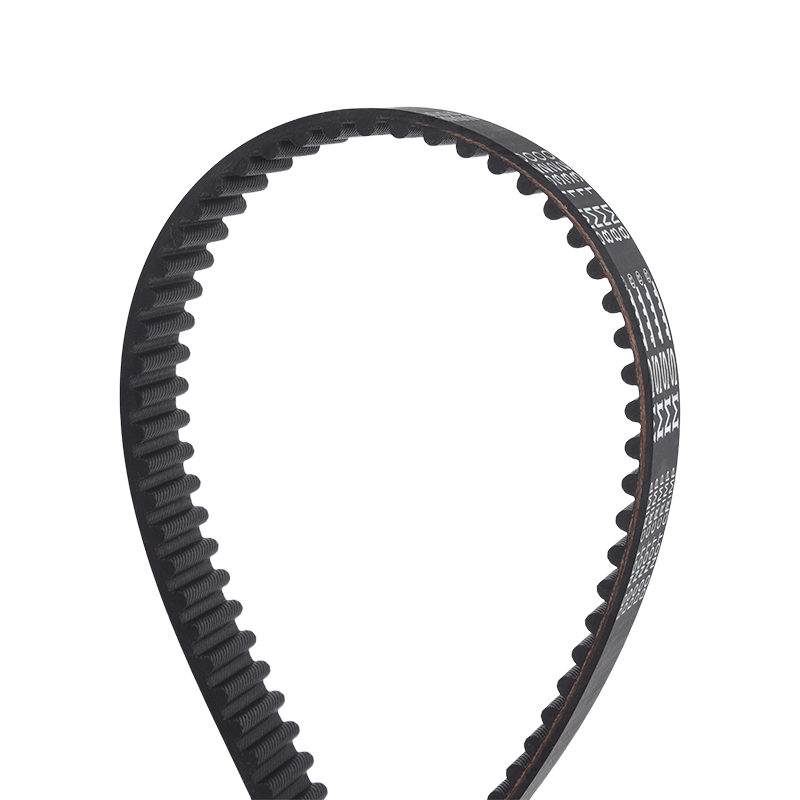
Turn the belt so the tooth side faces you and follow the fillet where each tooth meets the backing. That radius is where bending stress concentrates every time the belt wraps a pulley, and it is where structural failure begins. A crack running out of that fillet is a load-path crack, and it grows with every revolution.
The back of the belt behaves differently. Fine white lines across the backing fabric are common on used belts and usually reflect surface ageing of the fabric rather than a lost load path. They are a prompt to look closer, not an automatic replacement order. A belt with light backing lines and clean tooth roots will often run another full interval.
One exception matters. If the backing shows a single deep split that follows the cord direction, or a ragged edge along one side, the belt has been run over a seized pulley, a misaligned sprocket or a foreign object. Replace it regardless of mileage, because the cord underneath has almost certainly been cut.
Grading a Crack in Under a Minute
Four grades cover nearly every belt pulled from service, and only two of them change the maintenance plan:
- Grade 1: surface checking on the backing or the tooth face, with no measurable depth. Record it and re-inspect at the next oil change.
- Grade 2: a crack visible at the tooth root that has not yet reached the cord. Plan replacement at the next service window.
- Grade 3: cord visible inside the crack, or cracks crossing the full width of a tooth. The belt is at the end of its life and replacement is immediate.
- Grade 4: missing teeth, a glazed and polished tooth face, or a belt that no longer holds its moulded shape. Do not run the engine.
Grade 2 is the useful threshold and the one most often missed, because a grade 2 belt still runs quietly and still holds timing. It can survive thousands of miles in mild conditions, and it will not survive a cold snap, a missed oil change or a tensioner that has begun to bind. The honest advice to a customer is that grade 2 is a scheduling problem, not a diagnosis problem.
Compound and Cord Choice Set the Clock
Two belts fitted to the same engine can reach grade 2 years apart, and the difference is usually material rather than installation. Standard polychloroprene compounds hold up well in moderate engine bays but harden faster when the belt sees sustained heat from a turbocharger or a tightly packed front-end accessory drive. Hydrogenated nitrile compounds tolerate higher continuous temperatures and resist oil swelling better, which pushes the crack-initiation point later in the belt's life.
The tensile cord matters just as much. Glass cord gives stable length and predictable modulus at moderate cost, which suits most passenger applications. Aramid cord resists elongation better under shock loading but is less forgiving of small pulley diameters. Nylon or polyester facing fabrics reduce friction against the back-side idler, and that friction is a quiet contributor to heat build-up on the flat side of the belt.
For buyers specifying a replacement, the takeaway is that a cheaper belt is not simply a shorter-lived belt. It often fails in a different mode, cracking at the root earlier while still passing a tension check. A wider review of how these faults develop in service is covered in common automotive timing belt faults in use, and it is worth reading before a specification is fixed.
Noise: Separating Tension Faults from Belt Faults
Noise is the signal technicians argue about, because the same sound can originate in three places within 200 mm of each other. The way to settle it is to listen in a fixed order: cold start, hot idle, then raised speed. Each stage eliminates one possibility.
Cold-Start Chirp
A chirp in the first 30 to 60 seconds after a cold start, fading as the engine bay warms, points to insufficient tension or to a belt that has taken a permanent set. Rubber stiffens at low temperature, so a belt that is marginally tight will slip on the first few revolutions and then grip once heat builds.
If the chirp does not fade, stop treating it as a belt problem. A chirp that continues at hot idle usually comes from a tensioner bearing, an idler pulley or an accessory drive sharing the same belt path. The distinction is not academic. Replacing the belt will not fix a dry bearing, and the new belt will be damaged by the same bearing within a few thousand miles.
The Rhythmic Tick
A tick that repeats at half crankshaft speed on a four-stroke engine is a meshing sound. It comes from each tooth striking the floor of the pulley groove instead of rolling into it. The usual causes are a tooth profile that has worn out of shape, pulley grooves that have become polished or corroded, or a tensioner that has lost preload and lets the belt ride slightly high.
Temperature behaviour separates the two main explanations. If the tick softens once the engine is hot, the rubber has hardened and the belt is the likely source. If the tick stays exactly the same hot or cold, suspect geometry: groove wear, a damaged tooth, or a pulley that is no longer concentric with its shaft.
Whine or Roar at Speed
A whine that rises with engine speed above roughly 2,000 rpm is usually over-tension. Timing belts do not need to be guitar-string tight; they need enough preload to keep the teeth engaged and no more. Over-tension loads the water pump bearing, the cam bearings and the tensioner itself, and it is a frequent cause of premature failure that later gets blamed on the belt.
There is one counter-intuitive pattern worth remembering. A belt that is quiet when cold and noisy when hot behaves opposite to a tension fault and points towards the compound instead: heat softening reduces the belt's modulus, the tooth sits deeper in the groove, and the contact pattern changes. In that case, no amount of re-tensioning will silence the drive, and the correct fix is a belt rated for the actual temperature it sees.
Slipping and Tooth Jump: The Point of No Return
Slipping is not a gradual symptom in the way cracking is. A belt either holds pitch or it does not, and the transition from holding to jumping can happen inside a single cold start.
What a One-Tooth Jump Feels Like
A single tooth of jump retards or advances cam timing by a fixed angular amount. The driver notices a rough idle that was not there last week, a start that cranks longer than usual, a flat spot under light acceleration, and often a check-engine light within a few drive cycles. The stored codes usually include a camshaft-to-crankshaft correlation fault plus misfire codes concentrated on one bank or one cylinder.
Two teeth or more on an interference engine is a different category of event. Piston-to-valve contact becomes likely, and the damage appears as bent valves, cracked valve guides or a damaged piston crown. The belt itself is often intact after that event, which misleads owners into thinking the belt survived. It did not; it simply finished the job before the engine did.
Oil-Induced Slip Looks Like Wear
The most misleading case is a belt that looks structurally sound yet slips. A front crank seal or cam seal leak deposits oil on the tooth flanks, the rubber swells slightly and the tooth face glazes to a polished finish. The belt then has a lower coefficient of friction and a surface that reads as "old" rather than "contaminated".
The rule is uncompromising: any oil trace under the timing cover means the seal is replaced before a new belt goes on. Fitting a fresh belt over a leaking seal guarantees a repeat failure, and the second failure usually arrives far sooner than the first because the new belt is contaminated from day one. The same logic applies to worn pulley grooves, which will strip the teeth of a new belt in a few thousand miles while the belt itself is blamed.
 Automotive Timing Belts for Cam DrivesHeat- and oil-resistant synchronous belts for engine cam drives, available in RU, ZB, ZBS, YU, ZA, STS and MR profiles for matching replacement needs.View Product →
Replacement Windows: Mileage, Calendar Time and Duty Cycle
Mileage alone is a poor rule because the belt ages on two independent clocks. One is distance travelled, which governs fatigue cycles. The other is calendar time and heat exposure, which govern compound hardening. Whichever clock runs out first sets the interval.
| Duty cycle | Typical replacement window | Inspection interval | Parts to plan with the belt |
|---|---|---|---|
| Mixed suburban driving, moderate climate | 60,000 to 90,000 miles, or 6 years | Every 20,000 miles | Tensioner, idler |
| Short urban trips, frequent cold starts | 50,000 to 70,000 miles, or 5 years | Every 15,000 miles | Tensioner, idler, water pump |
| High ambient heat, towing, sustained load | 40,000 to 60,000 miles, or 4 years | Every 12,000 miles | Full kit plus crank and cam seals |
| Industrial drive, multi-shift operation | Set by measured elongation and tooth wear, not by distance | Monthly visual, quarterly tension check | Pulley wear and alignment check |
The calendar clock is the one owners ignore. A low-mileage belt that has spent seven years in a hot engine bay has absorbed the same heat cycles as a high-mileage belt and has probably hardened further, because it sat still between them. Belts stored on a shelf age too, which is why a replacement belt should carry a recent manufacturing date rather than a warehouse certificate from three years ago.
For industrial drives, distance is meaningless and elongation is everything. A belt that has stretched beyond its installation tension range will jump teeth under shock load regardless of how many hours it has run, and a belt that has lost tooth height has already changed its contact geometry.
A Twenty-Minute Inspection Sequence
The order below is arranged so that each step either confirms or eliminates the previous one. Doing it out of sequence produces the familiar false conclusion that the belt is fine because the engine still runs.
- Cold start and listen. Note any chirp in the first minute and whether it fades as the engine warms.
- Shut down, remove the upper timing cover and photograph the belt before touching anything. The photograph is the only record of the original condition.
- Rotate the engine by hand using the crank bolt, never the cam bolt, and bring the full belt length into view.
- Inspect every tooth root along the visible run and grade each crack using the four-grade scale.
- Turn the belt through 180 degrees where the routing allows and inspect the back side for splits and edge fraying.
- Spin the tensioner and idler by hand. Any roughness, axial play or free-spin that continues after release condemns the bearing.
- Run a fingernail across the pulley grooves. A groove that feels polished or has a visible step will not hold a new belt.
- Look for oil and coolant trails starting above the belt path and running down onto the teeth.
- Check that the belt sits centred on each pulley and that the back-side idler is square to the belt run.
Two results justify immediate replacement without further testing: cord visible in any crack, and a belt that sits off-centre on a pulley with correct alignment. Everything else can be scheduled, provided the schedule is actually kept.
 Synchronous Pulleys for Matched Belt DrivesPulleys in arc-tooth, linear and T-type profiles, with carbon steel, cast iron, aluminum alloy or engineering plastic options for accurate multi-axis transmission.View Product →
Where Premature Failures Actually Come From
When a belt fails far below its expected window, the belt itself is rarely the first suspect worth investigating. In service records, the belt is usually the last component to give up and the first one to be blamed.
Relative contribution to premature timing belt failure, based on typical field service patterns rather than a single statistical study
Belt run well beyond its service window
Tensioner or idler degradation
Oil or coolant contamination
Pulley groove wear or misalignment
Installation error, including prying and wrong index marks
Compound not matched to operating temperature
Installation
Prying a belt over a pulley flange cuts the cord even when the damage is invisible from outside. Every belt should be slipped on with the tensioner fully retracted.
Contamination
Oil attacks the rubber compound and coolant attacks the cord. Both arrive from seals that cost far less than the belt they destroy.
Storage
Belts stored near motors, in sunlight or under load take a set. A belt that hangs in a curve for two years will run in that curve.
Matching
A belt and pulley are a pair. New belt on worn grooves gives partial engagement, which reads in service as slipping even though the belt is correct.
The practical consequence for anyone buying replacement parts is that a belt-only order solves roughly half the problem. Tensioners, idlers and seals are consumables on the same schedule, and a kit that bundles them removes the most common reason a second failure arrives early.
Industrial Synchronous Belts: Same Symptoms, Different Consequences
The three signals look identical on a packaging line, a textile machine or a conveying drive, but the cost of missing them is measured differently. There is no valve to bend. Instead there is scrap product, a stopped shift, a damaged gearbox or a missed delivery window.
Industrial drives also give the maintenance team something an engine bay does not: visible access. That access changes the diagnostic method. Instead of listening for a tick, a technician can measure. Belt elongation against the original installation tension, tooth height against a new reference, and back-side wear across the full width are all measurable values that remove the guesswork entirely.
Three industrial patterns deserve specific attention. Multi-shift operation compresses the calendar clock, so a belt that would run six years in a car may reach its wear limit in eighteen months. Reverse-drive layouts using double-sided belts stress both tooth flanks and halve the tolerance for misalignment. High-torque, low-speed drives tolerate small pitch errors poorly, and a single skipped tooth can jam a mechanism rather than merely shift timing.
For heavy industrial duty where shock loads are routine, belt construction matters more than nominal rating. High-torque industrial timing belts use heavier cord and a reinforced tooth facing precisely because the failure mode there is tooth shear rather than gradual cracking, and shear gives no warning at all.
 Arc Tooth Industrial Rubber Synchronous BeltsOEM/wholesale arc tooth rubber synchronous belts in 2M–20M, S and R profiles for industrial drives including textile, printing and precision equipment.View Product →
Frequently Asked Questions
How many miles can a timing belt run before replacement?
Most passenger applications fall between 60,000 and 100,000 miles, with 60,000 to 90,000 being the realistic band for mixed driving. Short urban trips and high heat pull that figure down by 15,000 to 20,000 miles. The vehicle manufacturer's interval takes priority over any general figure, and the calendar limit of five to seven years applies even when mileage is low.
Can I replace only the belt and reuse the tensioner?
Technically yes, practically no. The tensioner has run the same number of cycles as the belt and its bearing is already past the point where failure probability starts climbing. A seized tensioner destroys a new belt quickly, and the labour to reach the belt is charged twice. Replacement of tensioner and idlers together with the belt is the lower-cost decision over any realistic ownership period.
Is a cracked belt safe to drive if it makes no noise?
It depends on the grade. Grade 1 surface checking is not an immediate concern and can be re-inspected. Grade 2 cracks at the tooth root mean the belt is scheduled for replacement within the next couple of thousand miles, and the car should not be used for long trips or sustained high-speed running in the meantime. Cord visible in a crack means the vehicle should not be driven at all.
Does a cold-start squeal always mean the belt is worn?
No. A squeal that disappears within a minute is more often a tension issue than a wear issue. A squeal that continues at operating temperature usually comes from a bearing in the tensioner, an idler or an accessory drive on the same belt path. Replacing the belt without finding the source produces the same noise again within weeks.
Can slipping be fixed by tightening the belt?
Only when the cause is genuinely low preload and the belt has not been contaminated. If the tooth faces are glazed from oil, adding tension raises the load on the bearings without restoring grip, and the belt will jump again under the first cold start. Oil-induced slip requires a seal replacement plus a new belt.
Are automotive and industrial synchronous belts interchangeable?
No, even when the pitch and tooth profile look similar. Automotive belts are specified around a narrow temperature band, specific accessory loads and a defined service life. Industrial belts are specified around continuous duty, wider ambient ranges and, in many cases, higher shock loads. Using one in place of the other usually shows up as early tooth wear rather than immediate failure, which makes it harder to trace.
What data should a buyer request before ordering a replacement belt?
Pitch and tooth profile, tooth count, width, cord material, compound type and the temperature range the belt is rated for. For industrial drives, add the installation tension range and the maximum allowable elongation. Without those values a belt can be dimensionally correct and still fail early, because the compound or cord was chosen for a different duty cycle.
Timing belt diagnosis is not complicated once the signals are ranked. Cracks tell you how much life is left. Noise tells you whether the problem is the belt or the hardware around it. Slipping tells you that the decision window has already closed.
The costly mistakes are almost never diagnostic. They are scheduling mistakes: a grade 2 belt left in place for another year, a new belt fitted over a leaking seal, a tensioner reused to save a small amount on a large labour bill. Each of those turns a planned replacement into an unplanned repair, and the difference in cost between the two is not close.
Check the belt at every oil change after the halfway point of its interval. Grade the cracks honestly, listen at cold start, and treat any change in idle quality as a timing question until it is proven otherwise. That habit, rather than any single specification, is what keeps a timing drive out of the failure column.
Productos calientes
-
 Ver más
-
 Ver más
Correa trapezoidal para la industria
-
 Ver más
Correa síncrona de caucho industrial tipo T
-
 Ver más
Correa dentada en forma de cuña
-
 Ver más
Correa de distribución engrosada
-
 Ver más
Correa de distribución abierta
-
 Ver más
Correa trapezoidal para automoción
-
 Ver más
Correa plana de goma
-
 Ver más
Cinturón acanalado
-
 Ver más
Polea síncrona
-
 Ver más
Correa síncrona de caucho industrial con dientes de arco
-
Ver más
Correa de distribución automotriz

¿Tiene alguna pregunta? ¡No dudes en contactar!
 Tel: +86-0574-62498188 62497298
 Fax: +86-0574-62497297
 E-mail:
 Add: No. 65, Middle Jinniu Road, ciudad de Moushan, ciudad de Yuyao, provincia de Zhejiang, China
Copyright © Ningbo GUL TZ Rubber Belt Co., Ltd. All rights reserved.

