 Es
Es 

When Should You Replace Your Vehicle Timing Belt to Prevent Complete Engine Failure
In the modern automotive powertrain system, there is a crucial yet often overlooked component. Whether it is daily commuting or long-distance driving, the precise operation of the engine relies heavily on the coordination of the vehicle timing belt. As a "lifeline" within the precision mechanical structure, the condition of the auto timing belt directly determines the lifespan and safety of the engine.
Core Mechanism: How auto timing belt Determines Engine Survival
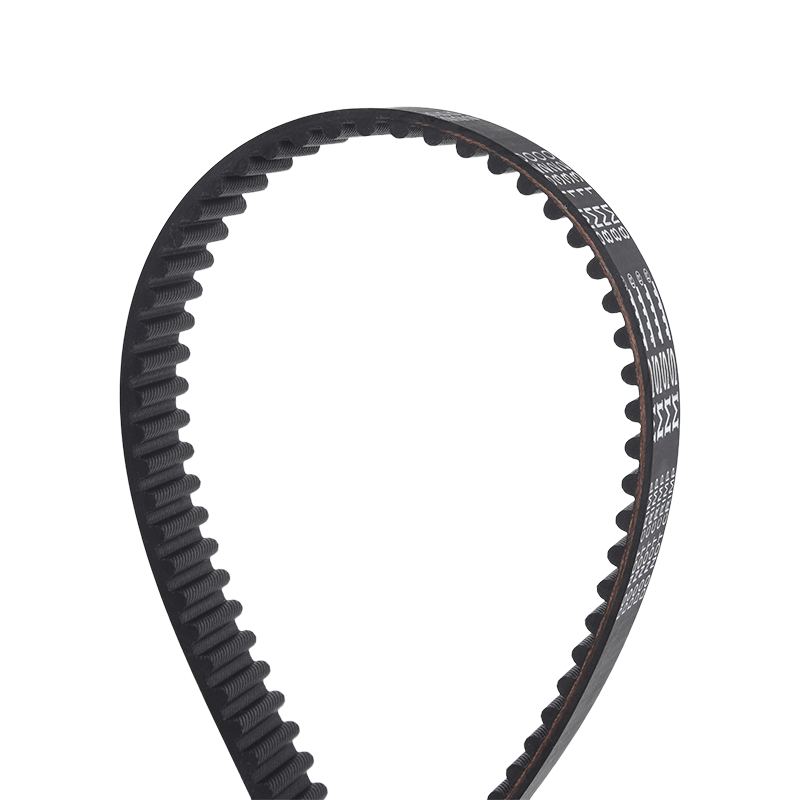
From a professional automotive engineering perspective, the primary responsibility of the vehicle timing belt is to connect the engine crankshaft and camshaft, ensuring that the opening and closing of the valves stay in absolute synchronization with the upward and downward movement of the pistons.
The internal combustion cycle of an engine (intake, compression, power, exhaust) demands extreme precision. If the automotive timing belts break or skip teeth, the camshaft will stop rotating immediately, while the crankshaft continues to spin at high speeds due to inertia. This inevitably leads to a collision between the pistons and the valves, causing bent valves, punctured pistons, or even a completely destroyed engine block. Therefore, understanding the criticality of this car parts timing belt is essential knowledge for every vehicle owner and repair technician.
Fault Identification: Common Symptoms and Inspection in auto repair timing belt
When performing auto repair timing belt services, experienced mechanics judge the wear level of the belt based on specific technical parameters and physical symptoms. When a vehicle exhibits the following anomalies, it signifies that the auto timing belt must be inspected or replaced immediately:
Abnormal Noise: A continuous squeaking or chirping sound coming from the front of the engine bay, usually caused by friction due to insufficient belt tension or material hardening.
Unstable Engine Idle: If the belt skips a tooth slightly, the valve timing becomes misaligned, leading to engine shudder at idle, increased fuel consumption, or a noticeable drop in power.
Visual Damage: After removing the timing cover, cracks on the back of the belt, frayed edges, or missing rubber teeth can be observed with the naked eye, as well as contamination from engine oil.
Core Parameter Comparison: Impact of Different Materials on vehicle timing belt Lifespan
| Performance Indicators / Parameters | Neoprene Rubber (CR) Belt | Hydrogenated Nitrile Rubber (HNBR) Belt | High-Strength Fiberglass Cord Belt |
| Temperature Limit | Approximately -30 deg C to 120 deg C | Approximately -40 deg C to 150 deg C | Excellent (Determined by base material) |
| Shear Strength | Standard Level | High (Increased by approximately 30 percent) | Extremely High (Prevents belt stretching) |
| Oil and Chemical Resistance | Average, susceptible to engine oil corrosion | Excellent, effectively resists lubricant penetration | Excellent, ensures internal structural stability |
| Recommended Replacement Interval | 60,000 km or 3 to 4 years | 80,000 to 100,000 km or 5 to 6 years | According to OEM manual (Usually longer interval) |
The comparison shows that high-performance automotive timing belts mostly utilize HNBR material reinforced with fiberglass layers to withstand the harsh internal operating environments of modern high-compression, high-power engines.
Professional Operating Specifications: Standardized Workflow for auto repair timing belt
Replacing a vehicle timing belt is a high-precision auto repair timing belt task that must follow strict technical specifications:
Absolute Alignment of Timing Marks: Before removing the old belt, the piston of cylinder number one must be turned to Top Dead Center (TDC), and the timing marks on both the crankshaft gear and camshaft gear must align perfectly with the reference lines on the engine block.
Simultaneous Component Replacement: The car parts timing belt does not operate as an isolated component. When replacing the belt, it is mandatory to replace the tensioner, idler pulleys, and the water pump if it is driven by the timing belt. Since the lifespan of these bearings is similar to that of the belt, a seized bearing will cause the new belt to snap instantly.
Precise Tension Setting: Excessive tension accelerates bearing wear and belt breakage, while insufficient tension causes tooth skipping. Specialized measuring tools must be used, or adjustment must follow the precise scale of the automatic tensioner, ensuring the auto timing belt maintains optimal transmission efficiency and stability during operation.
Productos calientes
-
 Ver más
-
 Ver más
Correa trapezoidal para la industria
-
 Ver más
Correa síncrona de caucho industrial tipo T
-
 Ver más
Correa dentada en forma de cuña
-
 Ver más
Correa de distribución engrosada
-
 Ver más
Correa de distribución abierta
-
 Ver más
Correa trapezoidal para automoción
-
 Ver más
Correa plana de goma
-
 Ver más
Cinturón acanalado
-
 Ver más
Polea síncrona
-
 Ver más
Correa síncrona de caucho industrial con dientes de arco
-
Ver más
Correa de distribución automotriz

¿Tiene alguna pregunta? ¡No dudes en contactar!
 Tel: +86-0574-62498188 62497298
 Fax: +86-0574-62497297
 E-mail:
  Add: No. 65, Middle Jinniu Road, ciudad de Moushan, ciudad de Yuyao, provincia de Zhejiang, China
Copyright © Ningbo GUL TZ Rubber Belt Co., Ltd. All rights reserved.

